
Proxy, BLOG, Cybersecurity & VPN
Best Proxy Provider for Ecommerce in Small Business: 8 Key Factors

Nov
The best proxy provider for ecommerce in small business is the one that fits your job, your budget, and your patience. It is not the one with the loudest ad. I learned this the slow way. The first time I searched for a provider for a small shop, every pricing page looked the same. I almost picked the cheapest plan. Then I read the terms and saw how little it covered.
Since then, I check eight factors before I trust any proxy provider. In this guide, I share those eight key factors in plain words. You will see how to match a proxy type to your task, how to compare plans, and how to spot red flags. Use them as a calm checklist when you search for the best proxy provider for ecommerce in small business.
What Makes the Best Proxy Provider for Ecommerce in Small Business?
A good provider matches your task, your budget, and your need for speed. Get them right, and the best proxy provider for ecommerce in small business becomes much easier to spot.
Start With the Job, Not the Brand
Name your task before you read a single plan. Small shops use proxies for three common jobs: price checks, ad checks, and local store views. Each job asks for different traits.
- Price checks need steady, polite visits to public pages.
- Ad checks need IP addresses in the markets where your ads run.
- Local store views need IP addresses in the right city or country.
Write the job in one line first. That one line keeps the search for the best proxy provider for ecommerce in small business from turning into a guessing game. In word terms, market research is the hypernym. Price monitoring and ad verification are its hyponyms.
Proxy Type and Budget
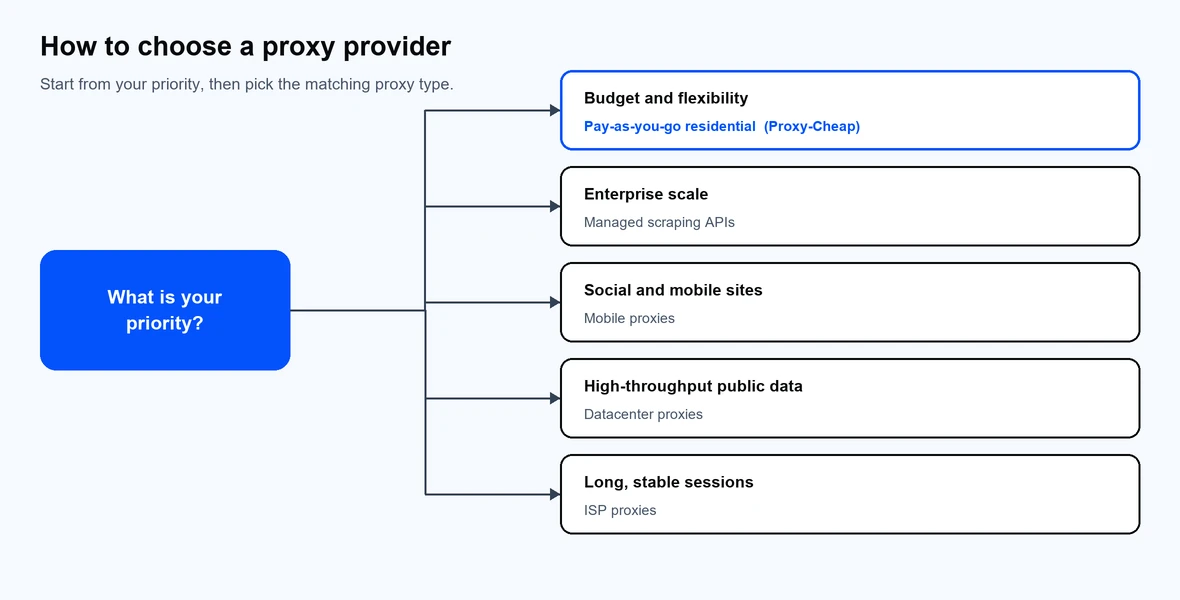
Match the proxy type to the job. Datacenter proxies use IP addresses from web hosts. They are cheaper and faster, but easier to block. Residential proxies use IP addresses from internet service providers. They look more like real home users, but they cost more. Mobile proxies use phone-network IP addresses and usually cost more still.
Providers also charge in different ways. Many offer a monthly plan, a charge by traffic, or a charge by IP address. Check which model fits your usage. A shop that checks ten pages a day pays very differently from a shop that checks ten thousand.
The cheapest plan is rarely the best value if it fails half the time. Cheap and costly are antonyms, but a fair price sits in between. Pick a price you can predict each month.
Speed and Reliability
Speed depends on server load, distance, and bandwidth. A provider with servers near your target market is often faster. Reliability is a different measure. It tells you how many requests succeed.
Ask the provider for an uptime figure in writing. Then test it yourself with a short trial. A week of real use shows more than any marketing page. Also ask whether failed requests count toward your bill, because the rule differs by provider.
How Do You Compare Proxy Providers Before You Pay?
Compare trial terms, IP coverage, and support before you pay anything. Ask every provider the same questions, and the comparison stays fair.
Trial Period and Refund Policy
A trial is the cheapest way to learn the truth. Look for a free trial, a small starter plan, or a clear refund window. Read how the refund works, because some plans limit it by time or by traffic used.
Run the same small test with each provider. Visit the same ten public pages, note the speed, and count the failures. Numbers beat feelings. This simple habit helps you find the best proxy provider for ecommerce in small business without spending a full budget.
IP Pool Size and Location Coverage
An IP pool is the full set of addresses a provider owns or rents. A bigger pool usually spreads your visits across more addresses. Location coverage matters just as much. If you sell in three countries, check that the provider offers addresses in those countries.
Ask where the IP addresses come from. Reputable providers explain the source in plain words. A pool is a meronym of the service, and the service is its holonym. Both parts matter when you compare plans.
Support, Documentation, and Clear Terms
Small shops rarely have a technical team. Good support saves hours. Test it before you buy. Send one simple question and see how fast and how clearly the answer comes.
Check the documentation too. Clear setup guides and plain terms of service are a good sign. A provider that hides its rules may hide other things as well.
Use this simple scorecard to compare each provider side by side:
Proxy Provider Comparison Factors
| Factor | Question to ask | Good sign |
| Trial and refund | Can I test before I commit? | Clear trial or refund window |
| IP pool | Where are the addresses from? | Plain explanation of the source |
| Locations | Are my target countries covered? | Country-level options |
| Support | How fast is the first answer? | Clear reply to a test question |
| Terms | Are the rules easy to read? | Plain terms, no hidden limits |
Which Red Flags and Choices Fit Your Shop Stage?
Walk away from vague promises, and match your plan to your stage. They protect your budget and your shop, and they keep the best proxy provider for ecommerce in small business within reach.
Red Flags to Walk Away From
Some warning signs show up before you pay. Treat these as reasons to look elsewhere:
- No clear terms of service or privacy policy.
- Promises like “never blocked” or “100% success.” No provider controls how other sites react.
- No explanation of where the IP addresses come from.
- No trial, no refund, and no way to contact a human.
- Free proxies from unknown operators, because you cannot tell who sees your traffic.
Keep your own use honest as well. Visit public pages only and respect each site’s terms and local laws. Do not use a proxy for fake reviews, fake accounts, or to dodge a ban. This guide is general information, not legal advice.
A Simple Pick for Each Shop Stage
Your stage decides your plan. These are simple starting points, not strict rules:
- New shop: Start with a small datacenter plan or a free trial. Check a few pages by hand first, and add a proxy only when the need is clear.
- Growing shop: Keep a datacenter plan for routine price checks. Add a small residential plan for checks that must look like a local shopper.
- Multi-market shop: Choose a provider with country-level options and strong support, because errors cost more when you sell in several places.
A stage plan also protects your budget. You pay for what you use today, not for what you might use next year. That calm approach is the heart of choosing the best proxy provider for ecommerce in small business.
Conclusion
The best proxy provider for ecommerce in small business is the one that fits your job, your budget, and your stage. Start with the task. Pick the proxy type that suits it. Test speed and reliability with a short trial. Compare IP coverage, support, and terms with the same scorecard. Then walk away from vague promises. I wish someone had given me this checklist before my first purchase. Use it, stay patient, and the best proxy provider for ecommerce in small business becomes a calm, clear choice.
FAQ
1.How much should a small business pay for a proxy provider?
There is no fixed price. Cost depends on the proxy type, your traffic, and the pricing model. Datacenter proxies are usually cheaper than residential or mobile ones. Start with a trial or a small plan, and pay for more only when your use grows.
2.Are free proxies safe for an online store?
Free proxies are often risky. You cannot tell who runs them or who sees your traffic. Avoid them for anything tied to your store accounts or customer data. A paid provider with readable terms is a safer base for the best proxy provider for ecommerce in small business.
3.Is a residential or datacenter proxy better for ecommerce?
Neither is better in every case. Datacenter proxies are cheaper and faster, but easier to block. Residential proxies look more like real home users, but cost more. Choose by the job: routine price checks often suit datacenter, and local views may suit residential.
4.How can I test a proxy provider before I commit?
Use a free trial, a small starter plan, or a refund window. Visit the same ten public pages with each provider. Record the speed and count the failures. Send one support question and note how fast the answer comes. Then compare the numbers side by side.
