
Proxy, BLOG, Cybersecurity & VPN
Buy Ecommerce Proxy for Small Business: 6 Steps to Order Safely
Nov
To buy ecommerce proxy for small business, follow six short steps: define the job, pick the type, compare plans, start small, test, and track. Skipping a step is where most first purchases go wrong. Many small shop owners click “Buy” too early. They skip the terms, choose a plan that is too big, and find out a week later that the proxy does not fit the task.
That story is common, and it is easy to avoid. This guide walks through the full order process in plain words. You will see what to prepare, how to check out safely, and what to do once the proxy is live. Use the steps as a calm checklist the next time you buy ecommerce proxy for small business.
What Should You Prepare Before You Buy?

Prepare three things first: your job, your volume, and your budget. Steps 1 and 2 address these points. A few minutes of prep make it much easier to buy ecommerce proxy for small business without waste.
Step 1: Define Your Job and Your Volume
Write down what the proxy must do. Small shops use a proxy for three common jobs: price checks, ad checks, and local store views. Each job is a hyponym of market research, which is the hypernym.
Then estimate your volume. Count how many pages you check per day and how many places you check them from. A shop that checks twenty pages a day has different needs from a shop that checks twenty thousand. Volume decides which plan size fits.
- Job: price checks, ad checks, or local views.
- Pages per day: a rough number is enough.
- Locations: the cities or countries you want to see.
Keep this note open. Every later step uses it.
Step 2: Pick the Proxy Type and Set a Budget
Match the type to the job. Datacenter proxies use IP addresses from web hosts. They are cheaper and faster, but easier to block. Residential proxies use IP addresses from internet service providers. They look more like real home users, but cost more. Mobile proxies use phone-network IP addresses and usually cost more still.
Then set a monthly cap. Decide the most you are willing to spend before you open any pricing page. Cheap and costly are antonyms, and a clear cap keeps you from drifting to either extreme. For a first purchase, a small plan is often enough. You can upgrade later when real use shows the need.
Many shops make one common mistake: they pick the biggest plan on day one. A better habit is to match the plan to this month’s work. When a shop buys ecommerce proxy for small business with a clear cap, every payment has a job. Without a cap, costs creep up quietly.
How Do You Choose a Plan and Check Out Safely?

Compare plans on the same points, start small, and pay on a clear, secure page. Steps 3 and 4 cover the order itself. This is the moment when you actually buy ecommerce proxy for small business, so slow down here.
Step 3: Compare Plans and Read the Terms
A plan is the holonym. Its parts are the meronyms: the traffic allowance, the number of IP addresses, the locations, and the support level. Check each part against your note from Step 1.
Providers charge in different ways. Many offer a monthly plan, a charge by traffic, or a charge by IP address. Pick the model that matches your volume. Then read the terms of service. Look for four things:
- The refund or cancellation rule.
- Limits on use, such as blocked sites or traffic caps.
- Whether failed requests count toward your bill.
- How the provider describes the source of its IP addresses.
Terms differ by provider, so confirm each point on the provider’s own page. Do not rely on a summary from a third party.
Step 4: Start Small and Pay Safely
Start with a free trial or the smallest plan. A small purchase, also called a small order, limits the loss if the fit is poor. Upgrade only after a real test.
Check out with care. Use these habits every time:
- Confirm the page address starts with https and matches the provider’s own site.
- Create the account with a strong, unique password.
- Pay with a method that offers buyer protection, if one is available to you.
- Save the invoice and the plan terms as they were on the day you paid.
A calm checkout takes ten minutes. It also leaves a paper trail if a question comes up later. That small effort is part of what it takes to buy ecommerce proxy for small business with confidence.
What Should You Do After You Buy?
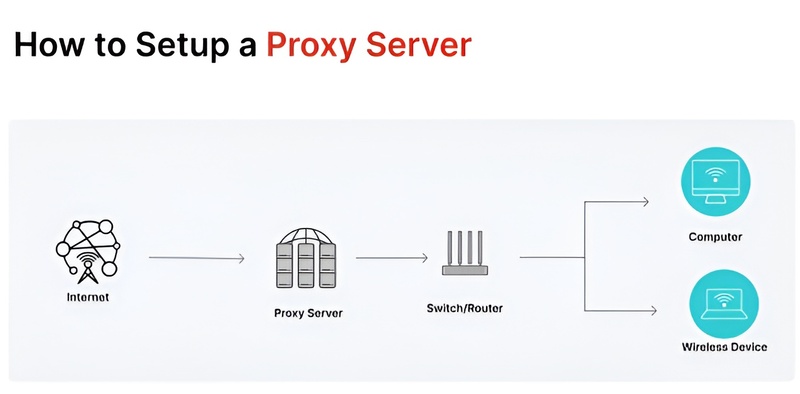
Test the proxy within the first days, then track use and cost every month. Steps 5 and 6 cover setup and review. The work does not end at checkout when you buy ecommerce proxy for small business.
Step 5: Set Up and Test the Proxy
Follow the provider’s setup guide. Most providers publish steps for common tools and browsers. Enter the address, port, and login exactly as shown.
Then run a short test. Visit the same ten public pages and record three numbers: the load time, the number of failed requests, and the location the page shows. If the numbers match your note from Step 1, the plan fits. If they do not, contact support and check the refund rule while the window is still open.
Keep every test polite. Visit public pages only, keep the pace light, and respect each site’s terms and local laws. This guide is general information, not legal advice.
Write the results in the same note. A short record helps later when you compare plans or ask support for help. Support teams act faster when a customer shares the test pages, the time, and the error message. Clear notes also show whether a problem comes from the plan or from the tool setup. Good records are part of how to buy ecommerce proxy for small business and keep it working.
Step 6: Track Usage, Renew, or Cancel
Track three figures each month: traffic used, cost, and failure rate.
Read the figures against your cap from Step 2. If use stays far below the plan, move down. If use keeps hitting the limit, move up. Start and stop are antonyms, and a good buyer knows when to do each. Set a calendar reminder before the renewal date, and cancel when the proxy no longer earns its cost.
Conclusion
A careful order saves a lot of trouble later. Define the job and the volume. Pick the type and set a cap. Compare plans and read the terms. Start small and pay on a secure page. Test the proxy in the first days, then track use and cost each month. Those six steps turn a risky click into a calm routine. Every small shop owner who wants to buy ecommerce proxy for small business can follow them, and none of them needs a technical team. Keep the checklist close, and the next time you buy ecommerce proxy for small business, the process feels simple, clear, and under control.
FAQs
1.What should you prepare before you buy an ecommerce proxy?
Prepare three things: the job, the volume, and a monthly cap. The job is price checks, ad checks, or local views. The volume is the number of pages you check per day. The cap is the most you are willing to spend. With these three notes, comparing plans takes minutes instead of hours. Preparation is the first step to buy ecommerce proxy for small business without waste.
2.Can you cancel or get a refund after you buy?
It depends on the provider. Some offer a trial or a refund window, and others do not. Read the refund and cancellation rules before you pay, and save a copy of the terms. Test the proxy in the first days, while any refund window is still open. Rules differ, so check them before you buy ecommerce proxy for small business.
3.Is it safe to pay an online proxy provider?
It is safe when you take basic care. Check that the page address starts with https and matches the provider’s own site. Use a unique password and a payment method with buyer protection, if one is available. Avoid unknown sellers with no terms, no contact details, and no clear source for their IP addresses. Safe checkout is part of how you buy ecommerce proxy for small business with confidence.
